Too much manual entry
An operations team copies records between tools.
Possible approach: Map the workflow, connect supported APIs, and introduce validation and exception reporting.
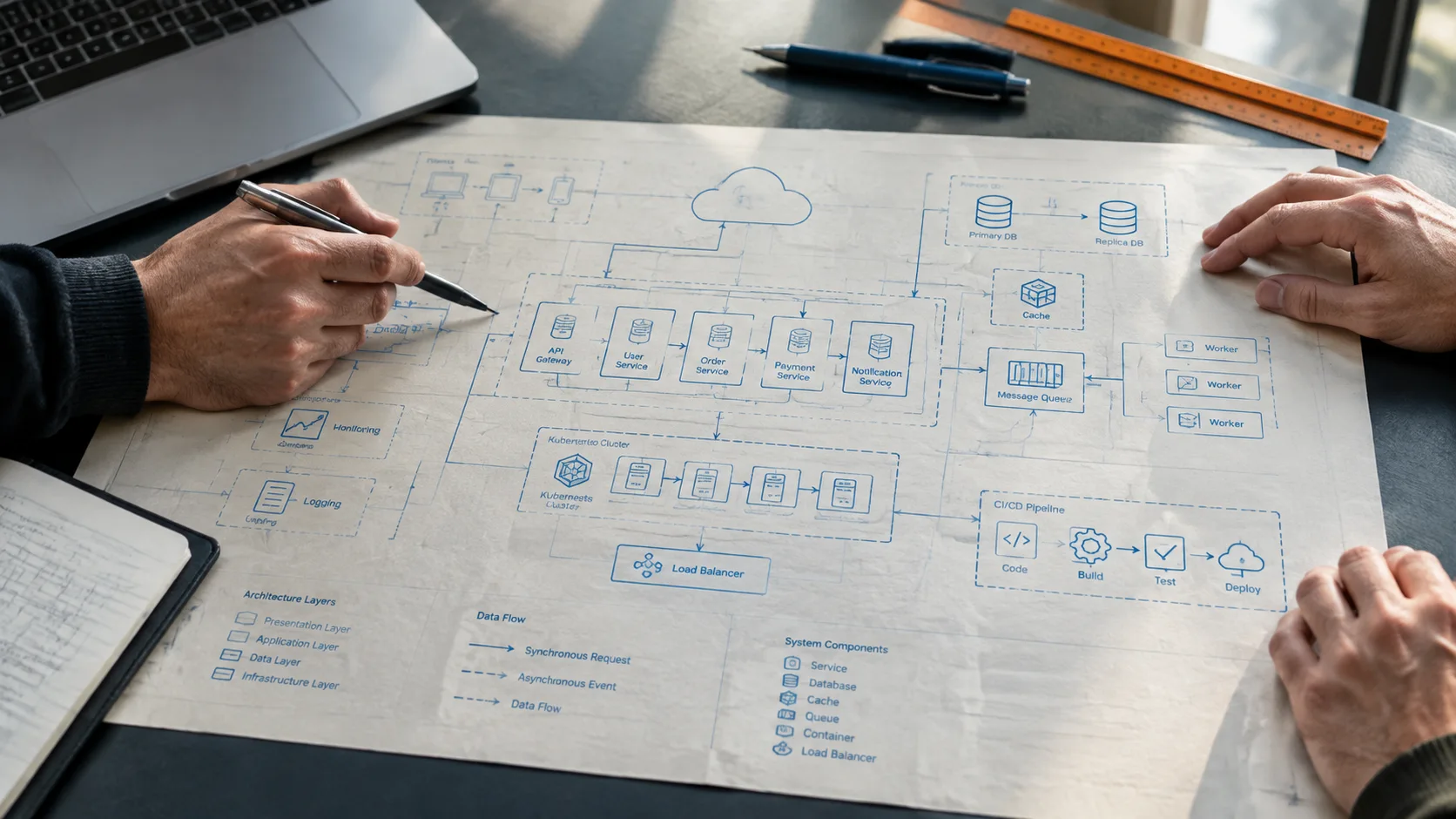
Software, connected systems, and the infrastructure behind them. IT engineering with a practical plan and a clear purpose.
LARA BAU GmbH is an IT company focused on the systems that support everyday work. Our approach brings application development, data exchange, and infrastructure into one coherent picture — shaped around the needs of each project.
From internal tools to customer-facing applications, development starts with understanding users, workflows, and constraints. Interfaces, application logic, and data structures are considered together, with testing and documentation throughout.

When information lives in different applications, integration can reduce repeated entry and make handovers clearer. We consider interfaces, data mapping, access controls, and failure handling — not just the connection itself.
Existing tools and the data they hold.
Clear contracts, validation, and mapping.
Consistent information across workflows.
Deployment is part of the system design. We consider development and production environments, configuration, release processes, and operational visibility so that software can be maintained after it goes live.

Existing systems carry valuable knowledge. An incremental approach identifies fragile areas, clarifies dependencies, and improves selected parts in manageable steps. The aim is a more maintainable system without treating a complete rewrite as the default.
Understand the problem, the people involved, and the existing technical landscape.
Define scope, dependencies, priorities, and what a useful outcome looks like.
Build in reviewable stages, test assumptions, and make decisions visible.
Prepare documentation, explain operational needs, and agree the next steps.
Readable code, deliberate boundaries, and choices that future maintainers can understand.
Validation, meaningful tests, and explicit handling of failures and edge cases.
Useful records of decisions, interfaces, and operating procedures — kept close to the work.
Illustrative examples, not completed projects or client case studies.
An operations team copies records between tools.
Possible approach: Map the workflow, connect supported APIs, and introduce validation and exception reporting.
A useful internal system has tightly coupled code.
Possible approach: Document dependencies, add targeted tests, and separate one high-priority function at a time.
Releases depend on undocumented manual steps.
Possible approach: Define environments, automate repeatable steps, and document monitoring and recovery procedures.
Existing applications and infrastructure can form the starting point. An initial review helps establish what to retain, what to improve, and which constraints need attention.
Scope is shaped around the intended outcome, current systems, and practical constraints. Requirements, deliverables, and responsibilities should be agreed before implementation.
No. Hosting decisions should reflect the application, operating requirements, and constraints. Improving an existing environment can be more appropriate than moving it.
Depending on the agreed scope, handover can include source code, technical documentation, deployment instructions, and an explanation of operational responsibilities.
Dawsonpatrick5678@geredi.com